How The Pandemic Is Reinventing The Business Of Retail – Forbes
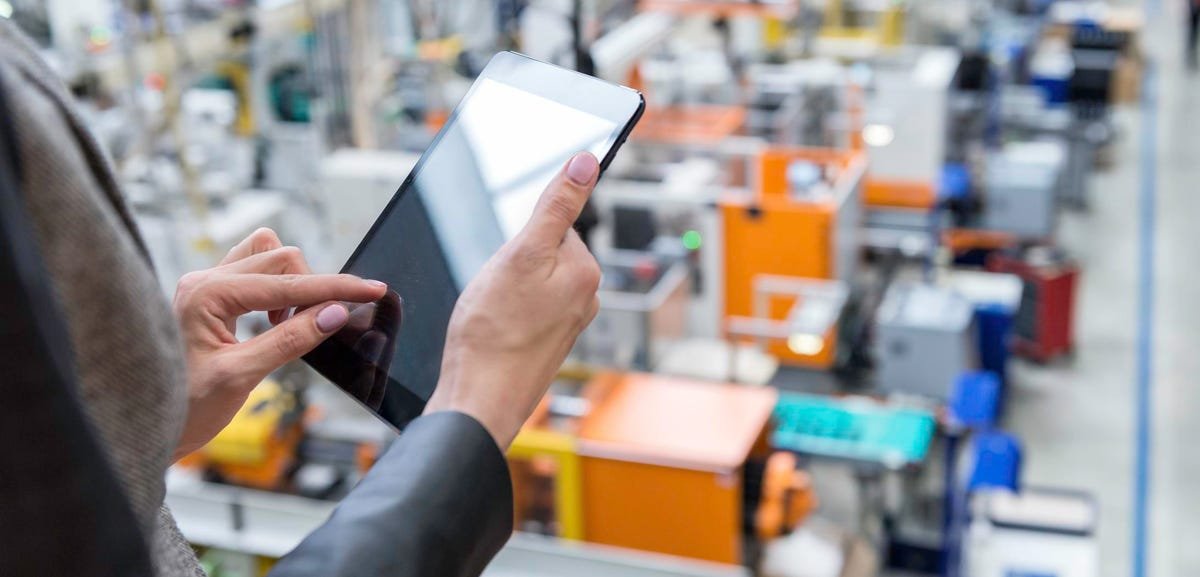
Businesswoman working with digital tablet in large futuristic factory. Woman standing on top of a … [+]
Year three of the COVID-19 pandemic begins with the retail industry battle-weary but having weathered and, in some cases, even capitalized on an epic worst-case management crisis. The good news is that the retail apocalypse of 2020, having cleared the field of weak competitors, spurred surviving brands and companies to rethink and reinvent how they do business.
We know what doesn’t work. Now what?
A key concept that will shape the future of the industry is collaboration, both within enterprises as well as between retailers and their sources, their partners, and their customers. This is new, a seminal change from the way the industry has operated for a century.
My first introduction to the dysfunctional aspects of retailing was in the early years of my career, when I worked for a supply chain technology company. We focused on logistics, product and demand forecasting, managing just-in-time inventory, and so on.
Forecasting in retail is tricky, especially in apparel where collections have been known to be dead on arrival because consumer tastes shifted after orders were placed. It became clear to me then that the problem is the way retailers have always been managed, in silos.
Manufacturing, logistics, merchandising, sales — each department of the companies we often worked with had its own data, its own spreadsheets, and its own forecasts. They often didn’t agree and that’s where problems would inevitably begin. Each department had its own version of the truth and, as the saying goes, we’re all entitled to our own opinions, but not our own facts.
We helped client companies break down the barriers, applying new technology and enabling a collaborative work environment.
The result was a “single version of the truth” of a forecast, which led to a reduction in error rates.
In the wake of Covid-19, the goal today is enterprise-wide seamlessness, and making sure the customer experience is as frictionless as possible. The future of retail begins with the sort of data mining of customers and transactions that made Amazon the monolith it became.
For example, Ian Watson, CEO of UK chain Hotter Shoes, explained in a recent interview how the direct-to-consumer company has been analyzing its database of 4.6 million people who’ve bought its products. At the start, the base was predominantly 55-plus and the average age had been 73, a potentially challenging demographic for future growth.
“2020 was a year of survival for us,” said Watson. “The pandemic gave us a license to try new things. We’re looking at how we can utilize that database to sell them other products outside of shoes.”
The company has been focusing on recruiting younger customers and has gotten the average age down to 63. Hotter has also been using its customer database to test new shoe styles and even fabrication changes to popular items.
It is this collaborative and connected model of looking at a company challenge and finding a “single version of the truth” (a.k.a. “single view of the customer”) to agree upon that leads the way to solving the problem.
In the most dramatic way possible, the pandemic has been what Austrian economist Joseph Schumpeter meant in 1942 when he coined the expression “creative destruction” to explain why innovation follows economic catastrophes. The theme in the retail industry for 2022 will be widespread innovation, less waste, and more sustainable enterprises. Wishing us all the best for 2022 and beyond.